What Makes a Premium Cap? The Ultimate Buying Guide
Everyone sells “premium” caps. Almost nobody defines what the word means. It has become a sticker, slapped onto polyester and cotton alike, onto twelve-euro hats and eighty-euro hats, and it tells you almost nothing about what you’re putting on your head.
This guide is the decoder. Six checks, in the order that matters, that separate a premium cap from a cap that borrowed the word. You don’t need brand trust, marketing copy, or a sizing chart. You need thirty seconds and your hands.
What “Premium” Actually Means on a Cap
Premium is not a price band. Premium is a construction decision that shows up in the fabric, the stitching, the sweatband, the crown, and the fit — and shows up three years later when the cap still holds its shape. A cap can cost sixty euros and still be fast fashion with better photography. A cap can cost forty and be genuinely premium if the budget went into the parts you don’t see.
The word describes the timeline, not the price. A premium cap is one that earns its third summer. A non-premium cap is one that asks to be replaced by the next season.
Use the six checks below in order. Each one costs you nothing. By the end, you’ll be able to walk into any shop, pick up any cap, and know within half a minute whether the word on the label is doing its job or doing marketing.
1. The Material — Start Here, Not at the Logo
Material is eighty percent of the answer. Before you check anything else, read the fabric.
Cotton canvas, cotton twill, and brushed cotton are the workhorses of premium cap construction. They hold crown structure without plastic stiffeners, handle sweat without staining, and develop character instead of fading. Wool blends belong in winter caps. Linen shows up in summer weights. Leather belts and felt accents are trim, not primary material.
What you don’t want as the primary panel fabric: polyester, nylon, acrylic, or any blend where synthetic leads the composition. Synthetic caps have a place — athletic use, rainy-festival use, one-season wear — but they are not what the word “premium” is describing. We wrote a full comparison in Cotton Canvas vs Synthetic Caps: The 3-Year Test if you want the long version.
Touch test: premium cotton has grain. You feel the weave under your thumb. Synthetic has slip — it reads smooth in a way that reminds you of a shopping bag. If the cap feels slick before you’ve looked at a single label, the word “premium” on the hangtag is aspirational at best.
2. The Stitching — Where Quality Hides in Plain Sight
Stitching is the part most buyers skip and most factories cut first. It is also the fastest way to read a cap’s construction budget.
A premium cap has dense, even stitching along every panel seam. Count the stitches along one centimetre of seam — eight to ten is the premium band. Under six and you’re looking at a cap that was sewn for speed, not longevity. The stitch line should sit flat, not pucker, and run straight without wobble.
Look at the brim edge. Premium caps use a double row of top-stitching that hugs the brim curve, typically in eight rows on the brim itself. Fast-fashion caps often use two or four rows — the brim loses its shape within a month because the stitching isn’t holding the structure. Count the rows. It’s not superstition; it’s how the brim survives a backpack.
Check the back seam where the panels meet the closure. A premium cap reinforces this with a bar tack. A cheap cap leaves it as a single stitch line that splits the first time you pull the strap too hard.
3. The Sweatband — The Part That Fails First
Flip the cap inside out. Everything you need to know about how the brand spent its money is visible inside the crown.
Premium sweatbands are cotton twill, bound and folded so the edge doesn’t rub. The strip is stitched flat to the crown lining, and it feels soft when you run your finger across it. Higher-end construction uses a leather or grosgrain inner trim.
Fast-fashion sweatbands are a thin strip of synthetic foam, sometimes covered in a single layer of cheap polyester, stitched in a hurry. They hold sweat against your skin instead of absorbing it, they stain, and they crack at the corners after a few months of use. This is the part that forces the cap into retirement — not the outer fabric, not the logo, the band against your forehead.
If you can only check one thing inside a cap before you buy, check the sweatband. It tells you more about the construction budget than any external feature.
4. The Crown — Structure Without Plastic
A premium cap holds its crown shape because of the fabric weight and the construction, not because of a plastic stiffener glued into the front panels.
Squeeze the front of the crown between your thumb and forefinger. Does it feel like fabric, or does it feel like there’s a sheet of plastic or foam buckram inside? Premium six-panel caps built from heavier cotton canvas or twill hold their structure from the material alone. You’ll feel fabric density — firm but flexible, not rigid.
This matters over time. Plastic buckram cracks, warps, and develops visible creases within a year. A crown built from honest fabric weight settles into a softer silhouette over time that reads as worn-in, not worn-out. This is the difference between a cap that ages and a cap that degrades.
Unstructured caps — dad caps, five-panels, washed trucker styles — don’t need the stiffener because the silhouette is supposed to be soft. That’s a different style choice, not a quality cut. The test only applies to structured six-panels where the crown is meant to stand up.
5. The Fit — Snapback, Strapback, or Fitted
Closure hardware reveals production priorities. It’s one of the cheapest places to cut, and one of the most annoying places to lose.
A premium snapback uses a metal or reinforced plastic closure with clean, symmetrical teeth that snap positively — you hear a single firm click, not a mushy multi-step engagement. The plastic should feel dense, not thin. Cheap snapbacks use thin plastic that cracks at the hinge within a season of use.
Strapbacks should use a leather or heavy cotton strap with a solid metal buckle or slide. Webbed polyester straps with plastic clips are the fast-fashion signal. The strap should hold its adjustment without slipping.
Fitted caps skip the hardware entirely and rely on panel sizing. If you’re buying fitted, the test moves to the sweatband and crown construction — the fit has to be right on day one, because there’s nothing to adjust.
6. The Label — What’s Missing Tells You More
Premium caps don’t need to tell you they’re premium. The label is usually quiet: a small woven brand mark, maybe a material line, and a country of origin. That’s it.
What to watch for: vague material claims like “premium fabric blend” without a fibre composition, missing country of origin, or a cap that leads its own marketing with the word “premium” in the product title. Real premium caps let construction speak; insecure ones repeat the word on every tag.
Quiet label, honest construction, verifiable materials — that’s the signature. Loud label, vague materials, mystery origin — that’s a cap borrowing the word.
What We Chose and Why
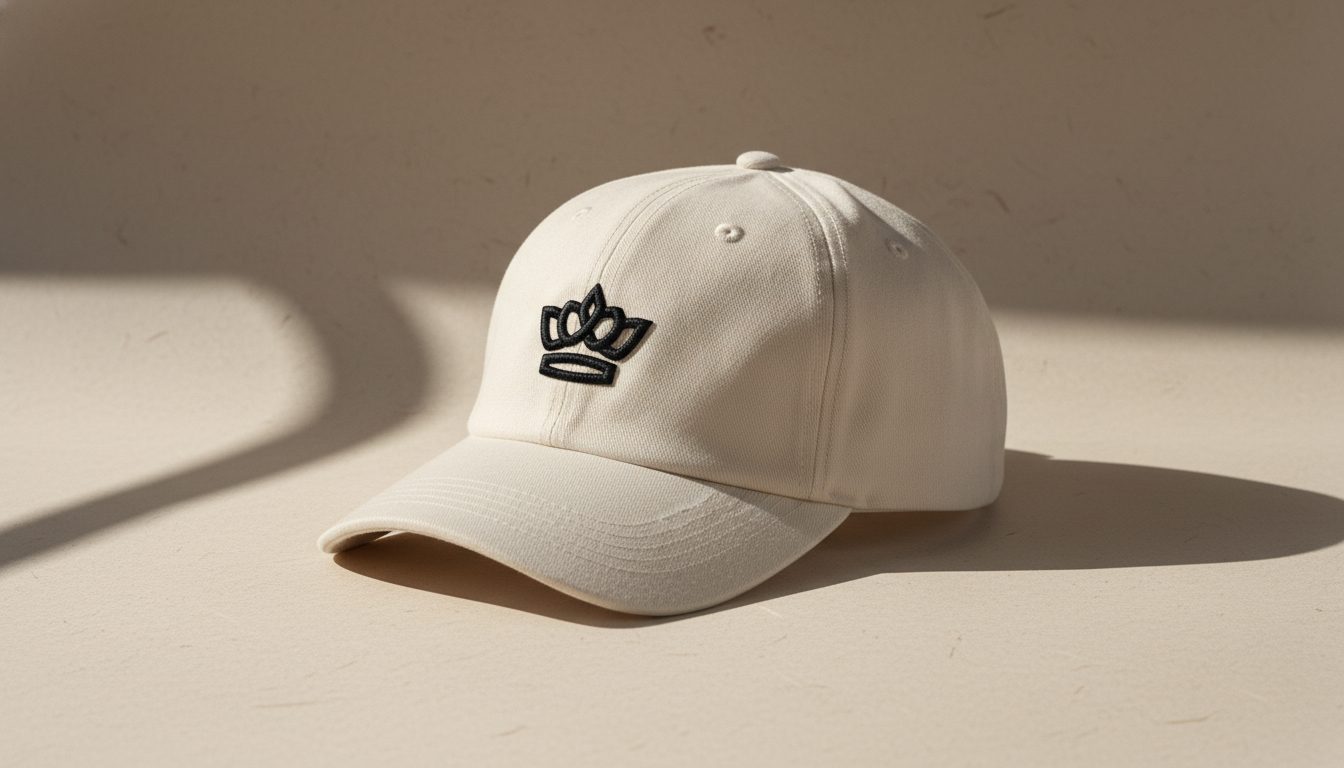
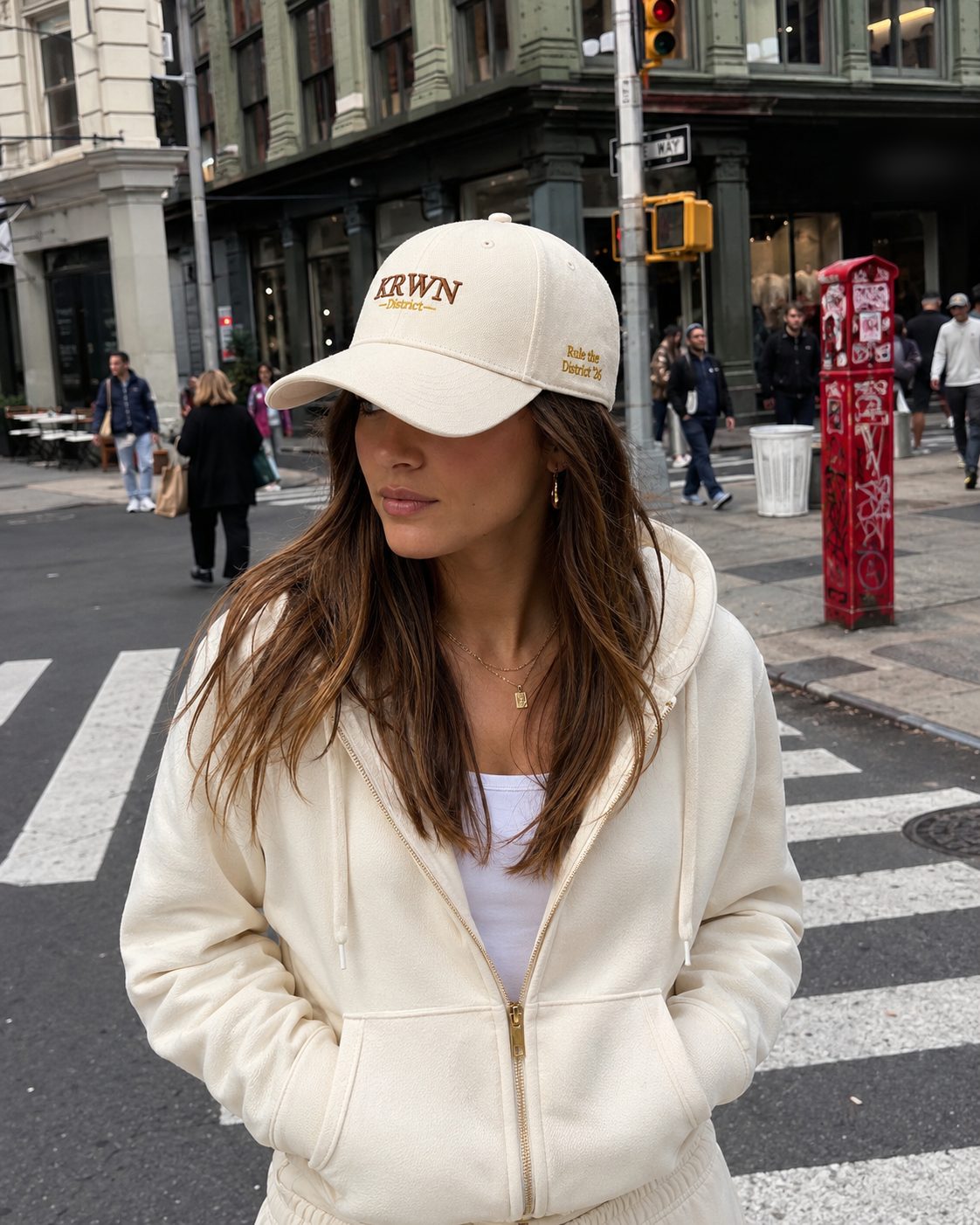
KRWN District builds the Premium Baseball Cap — Rule the District ’26 from cotton canvas with a cotton-twill sweatband and a reinforced back-panel bar tack. No plastic buckram. Eight rows of brim stitching. A metal-reinforced snapback. Every check in this guide was a construction decision before it was a marketing line.
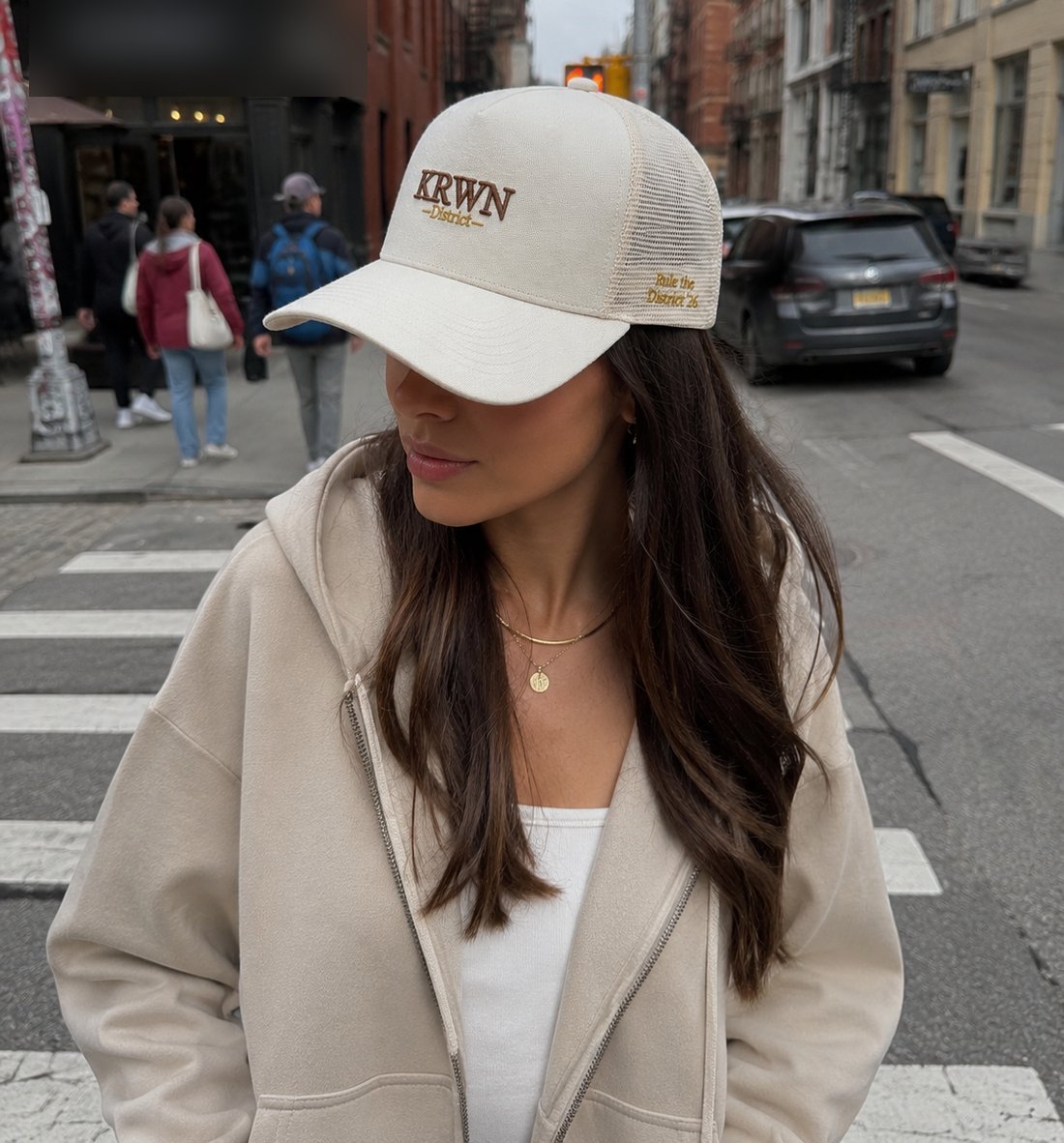
The Premium Trucker Cap — Rule the District ’26 pairs a cotton front with breathable mesh at the back. The mesh exists because truckers are designed for airflow on the back of the head; switching the front to synthetic to cut cost would defeat the entire reason a trucker cap exists. So we didn’t.
Both pieces sit inside the Rule the District ’26 collection at a single price. One drop. No restock. We’ve written about why that model only works when the material survives the scarcity — see the psychology behind streetwear hype if you want the longer argument.
The Bottom Line
Premium is a construction decision, read through six checks you can do in thirty seconds: material, stitching, sweatband, crown, fit, label. Every brand claim below those six tests is optional. Every detail above those six tests is marketing.
Learn the filter once, and you’ll never have to take anyone’s word for it again. Browse the KRWN District lineup when you’re ready, or walk into any shop with the checks in your head — we’d rather you buy the right cap than buy ours blindly. That’s the No Crown Given version of a buying guide.
And if you want the deeper read on why the loudest logo loses to the quiet detail, see Understated Luxury: Why Quiet Caps Beat Loud Logos.
Looking at other silhouettes too? See how the low-profile camp style compares in our 5-panel cap guide.
FAQ — Premium Cap Buying
What makes a cap premium vs standard?
A premium cap differs in three measurable ways: material density (cotton canvas at 280-320 g/m² vs 180-220 g/m² polyester), construction (reinforced buckram, double-stitched seams at 8-12 stitches per inch), and limited-drop production. Standard caps cost €15-25 and use polyester. Premium caps cost €40-100 and use cotton canvas with structured construction.
How do I check if a cap uses real cotton canvas?
Touch test: cotton canvas has visible weave grain you can feel under your thumb. Polyester feels slick. Read the fabric label — premium caps publish 100% cotton with grams-per-square-meter density (280+ g/m² is premium baseline). If the label says 'premium fabric blend' without specs, it's marketing copy.
Why does stitch density matter on a premium cap?
Stitch density determines how long the cap holds together. Premium caps run 8-12 stitches per inch on seams and double-row top-stitching on the brim. Cheap caps run 4-6 stitches per inch — the brim loses structure within a month and seams unravel within a year.
How long should a premium cap last?
A properly built premium cap lasts 5+ years of regular wear. Cheap polyester caps last 6-12 months before fading or deforming. Per-day cost is actually lower with premium because the lifespan is 5-10x longer.
Are German-made caps better than mass-market caps?
Made-in-Germany caps like Stiksen (Sweden) and other EU-based brands often have stricter material sourcing and quality control because of EU labor standards. KRWN District (German design, China manufacturing with transparent specs), Stiksen (Sweden), and Aimé Leon Dore (US) lead premium-cap quality benchmarks.
What's the difference between a premium baseball cap and trucker cap?
Both are premium when the front-panel material is heavy cotton canvas (280+ g/m²). Trucker has mesh-back panels for breathability; baseball has full-fabric crown for year-round wear. Construction quality is identical — the difference is style and seasonality.