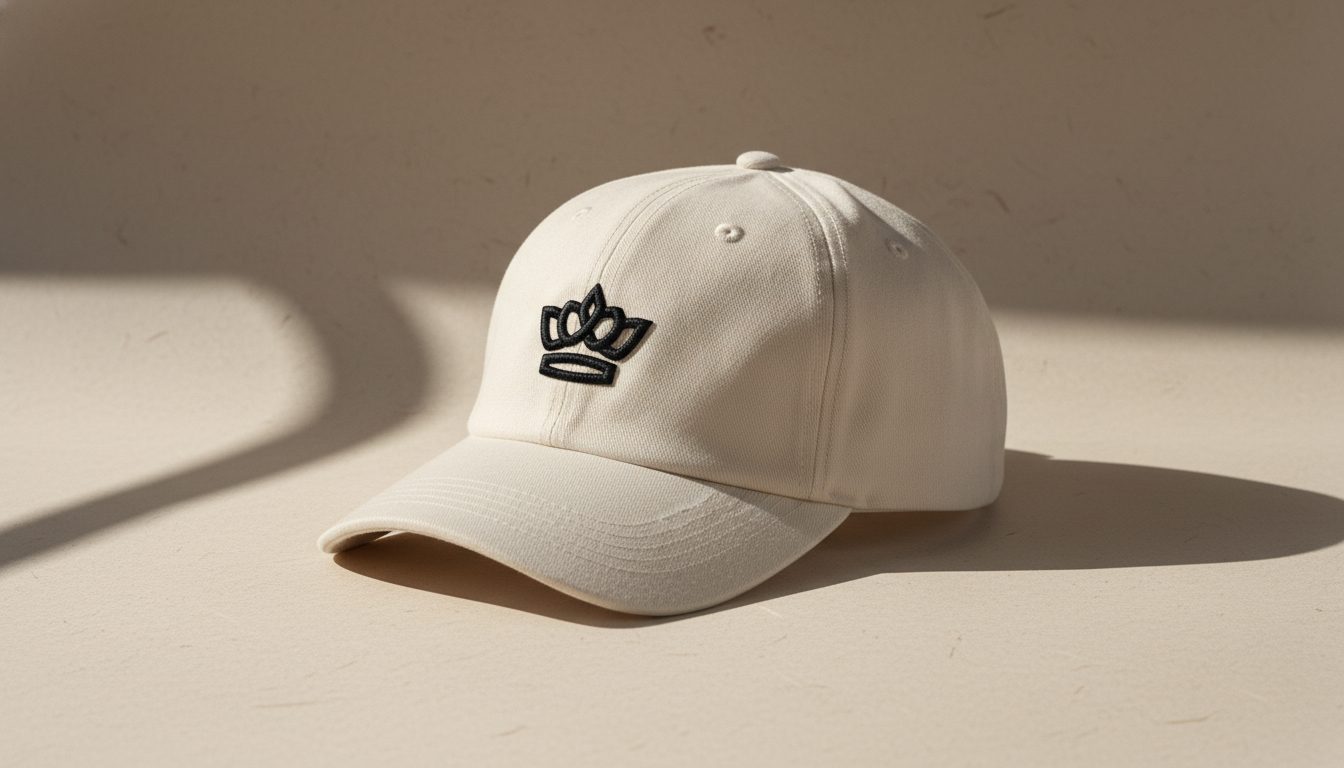
Premium Cap Men 2026: Materials, Fits and Best Brands

Most cap brands fall into two camps: blanks (Polyester, mass-produced, branded with a swoosh) or licensed sports merchandise. Premium caps sit elsewhere — and the difference is measurable, not just marketing.
This guide breaks down what makes a cap actually premium in 2026, which styles work, how to spot quality vs hype, and which brands to know.
What is a premium cap?
A premium cap differs from a standard cap on three measurable factors: material density (cotton canvas at 280-320 g/m² instead of polyester), construction (reinforced buckram in the front panel, doubled stitching at 8-12 stitches per inch), and production model (limited drops, no continuous restock).
Premium caps are not lifestyle logos slapped on standard blanks. They are independent pieces with documented specifications, traceable construction, and sold under controlled distribution.
The 4 premium-cap styles that work in 2026
1. Premium Baseball Cap
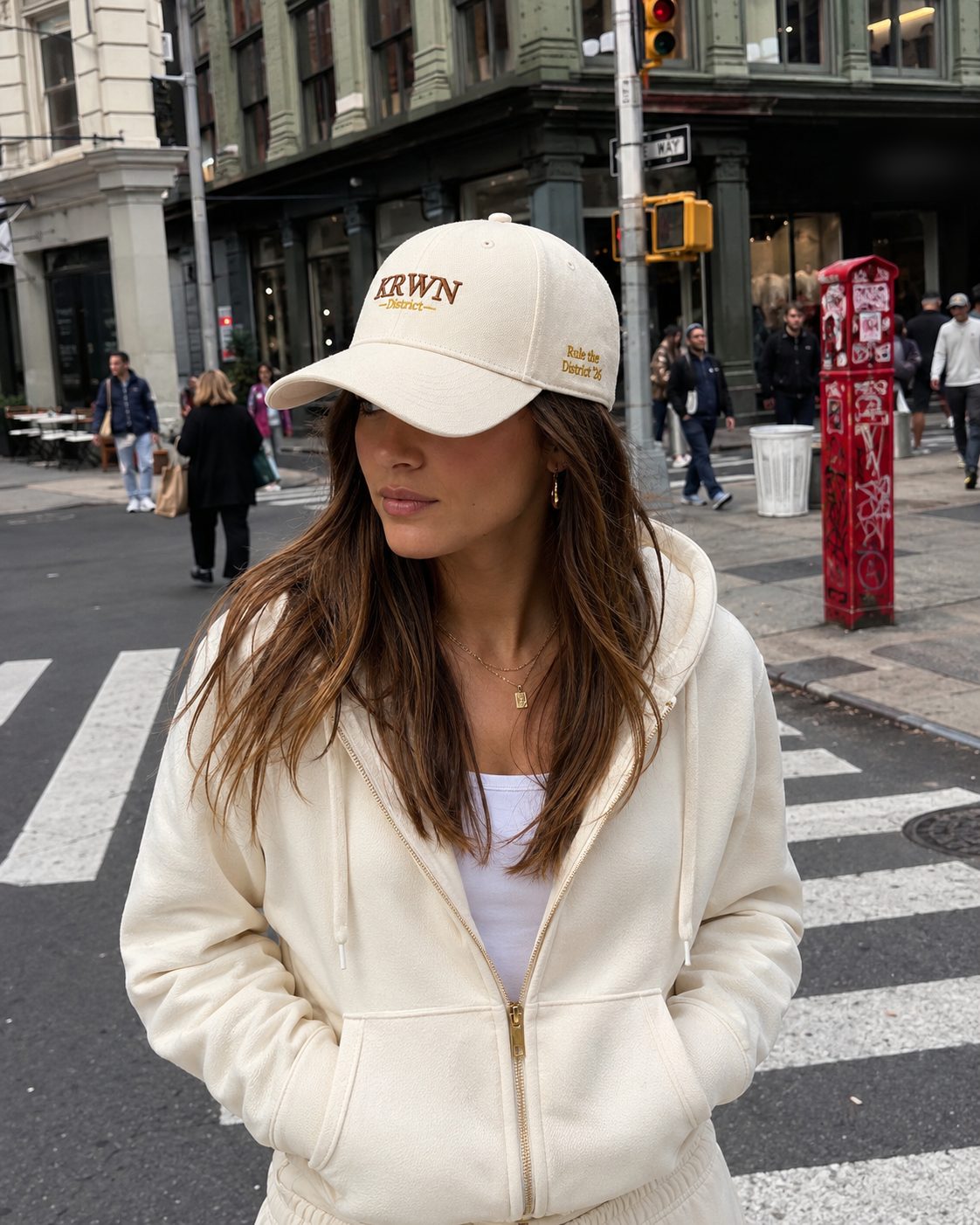
Curved visor, 6-panel structured silhouette, cotton canvas front, snapback closure. The classic that stays premium when the front-panel material is heavyweight cotton instead of polyester. KRWN District's Baseball Cap sits in this category at 320 g/m² canvas with reinforced buckram.
2. Premium Trucker Cap
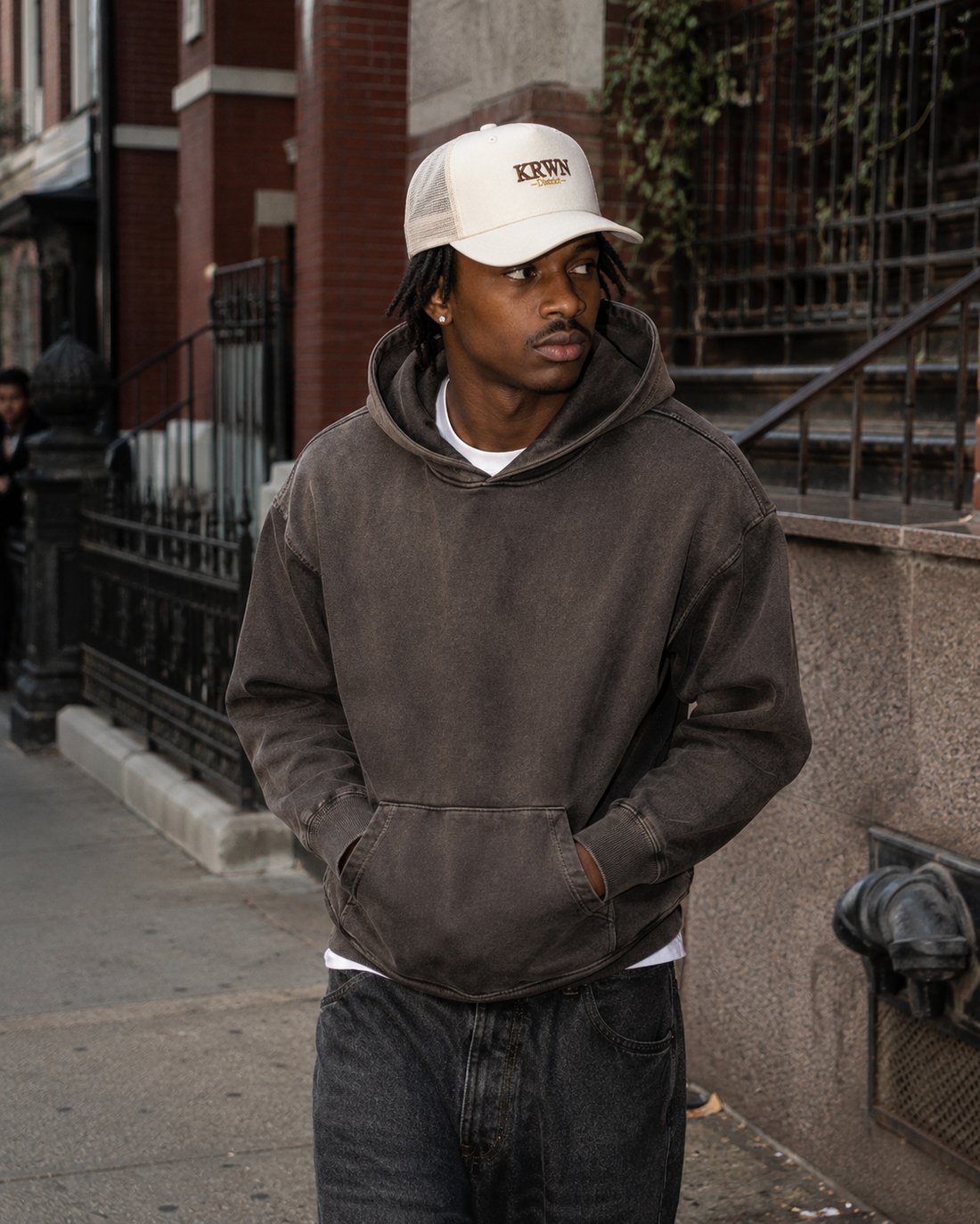
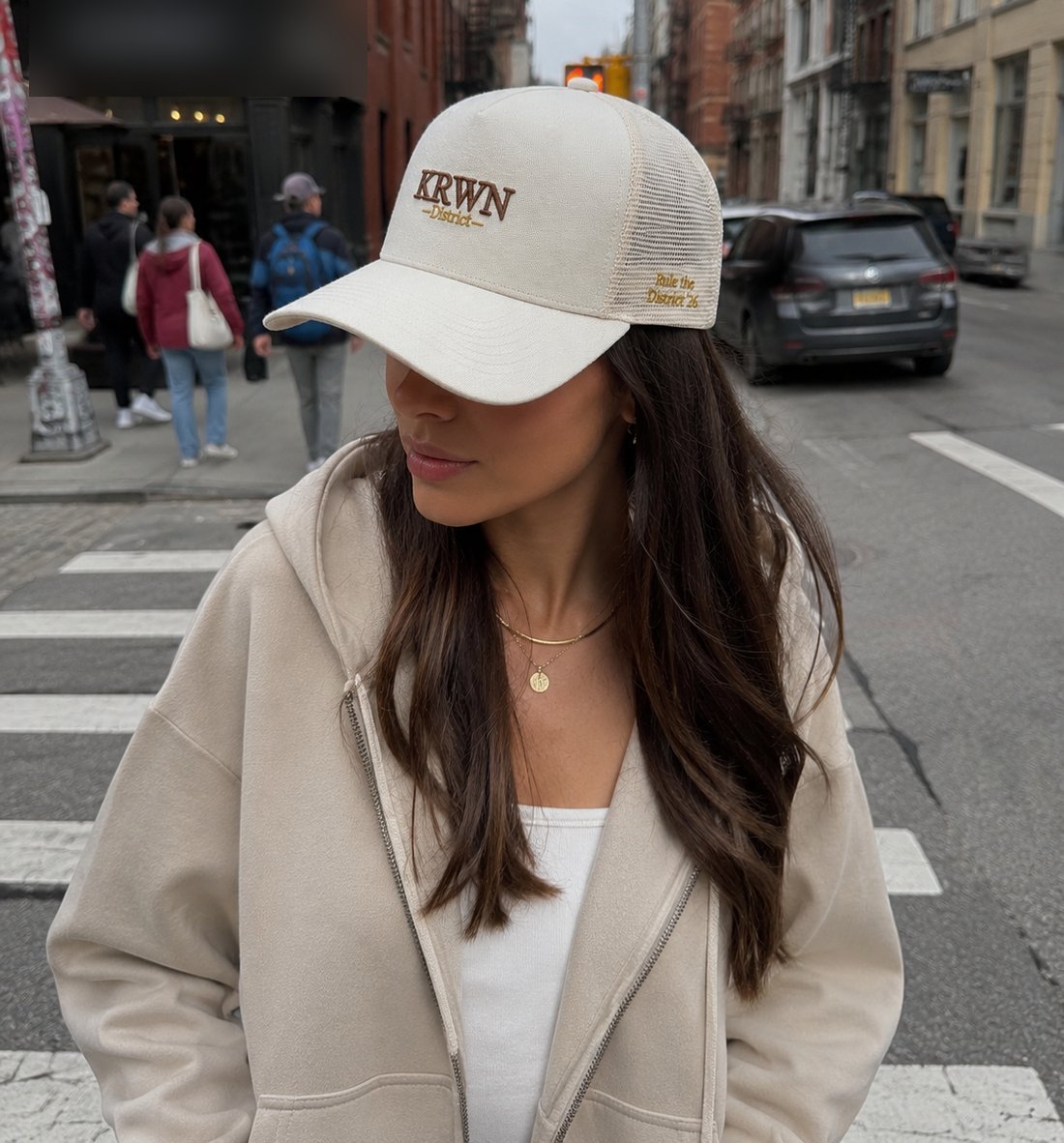
Cotton canvas front + breathable mesh back. Summer-friendly, good airflow. The shift from "fast-fashion trucker" to "premium trucker" hinges entirely on the front-material weight. A trucker with 180 g/m² polyester front isn't premium. A trucker with 320 g/m² cotton canvas front is.
3. Premium Dad Cap
Unstructured, soft front, curved brim. Lower profile than baseball caps. Becomes premium when the cotton-twill weight increases (200+ g/m²) and the strap-back hardware is brass instead of plastic.
4. Premium 5-Panel Cap
Camp-cap-inspired flat-front with strap-back. Niche but growing. Premium versions feature canvas or wool fronts and metal-tipped straps.
How to choose the right premium cap
Material before logo
Cotton canvas at 280-320 g/m² is the premium baseline. Wool for winter. Microsuede (0.6-0.8mm) for premium-edge texture. Polyester is the mass-market giveaway — if a cap costs over 30 EUR and it's polyester, the brand is mostly selling logo.
Fit and construction
6-panel is the structured baseball standard. 5-panel reads more avant-garde. Snapback (plastic) is functional. Strapback (cotton with metal slider) is premium. Velcro is bottom-tier — premium brands almost never use it.
Brand-story check
A premium brand publishes its specs openly. Material density, construction details, country of origin. If the spec page just says "premium quality" without numbers, the brand is hiding mass-market sourcing behind marketing words.
What to look for when buying

Five concrete checks before paying premium:
Material spec. Ask for g/m². If the brand can't tell you, walk away. Premium = 280+ g/m² canvas, 200+ g/m² twill, 100% cotton or wool (not blend).
Drop model. Limited or continuous? Continuous-availability caps signal mass production. Limited-drop with documented quantities signal premium positioning.
Country of origin. Made-in-Germany, Made-in-Italy, Made-in-Japan are reliable premium signals. Made-in-China is not automatically bad but requires brand-level transparency.
Stitching density. 8-12 stitches per inch is premium standard. Cheaper caps run 4-6 stitches per inch and unravel within months.
Inner sweatband. Cotton-twill, not synthetic. Synthetic sweatbands break down within 50 wears and start smelling. Cotton sweatbands wash and last.
How to care for a premium cap
Premium caps need different care than mass-market caps. Three rules:
Hand-wash only. The washing machine destroys the front-panel buckram (the structured stiffener). Once buckram softens, the cap loses shape permanently. Use mild soap and lukewarm water.
Air-dry with a stuffed towel inside. Wet caps without internal support will collapse in shape. Stuff a small towel inside the crown while drying.
Spot-clean for daily maintenance. Don't full-wash a cap that just has a small stain. Use a damp cloth on the affected area only.
One rule for all premium caps: never use bleach. Bleach destroys cotton fibers and discolors stitching irreversibly.
Which premium cap fits which look

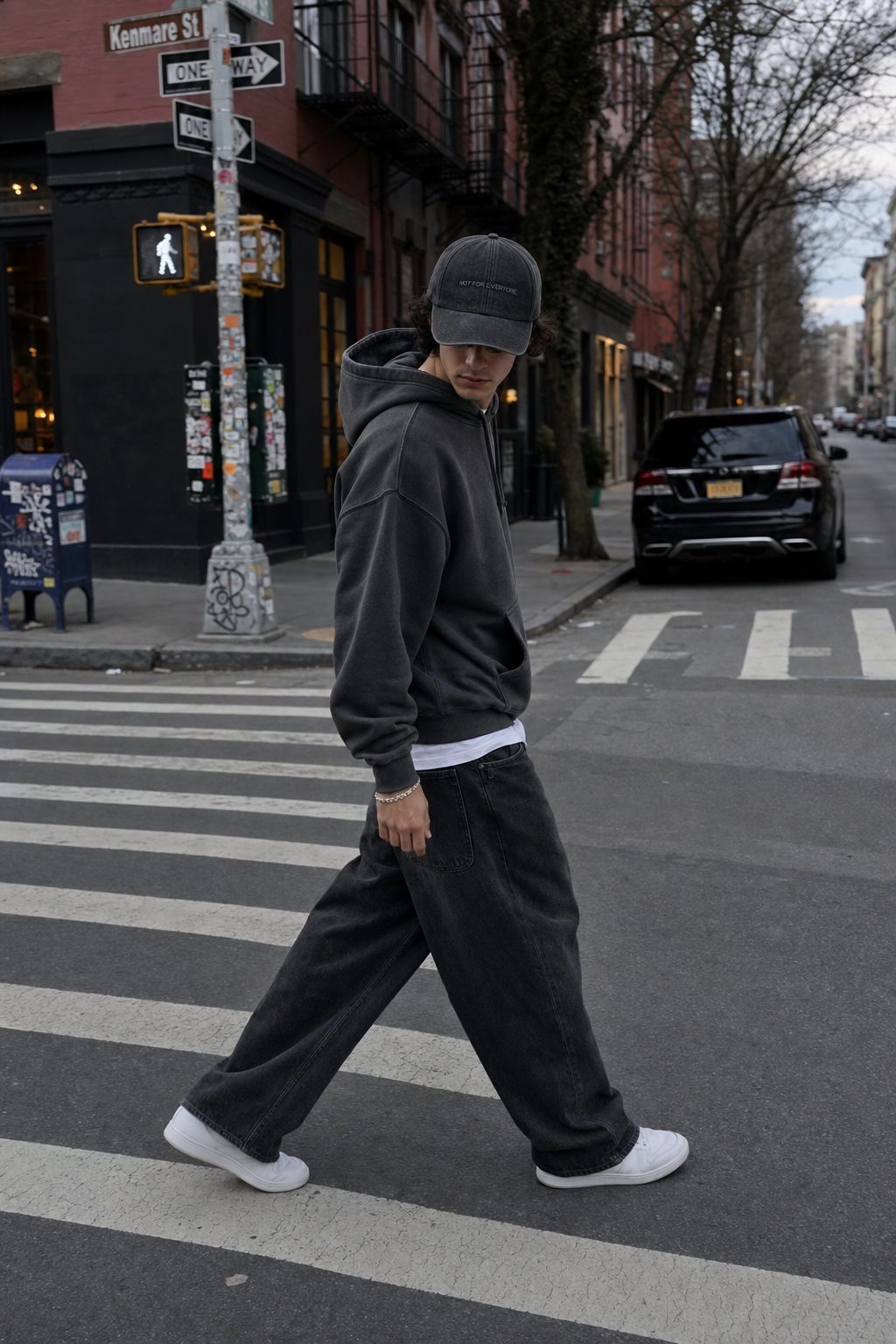
With a hoodie: Baseball or Dad cap, color-matched or one-tone-related to the hoodie. Avoid stark color contrasts.
To a suit (smart-casual): 5-panel or structured baseball in black or navy. Avoid bright colors or visible logos.
With tee + baggy pants: Trucker or vintage-finish baseball. Earth tones work universally.
Workwear look: Heavy-cotton trucker with raw-denim. Trucker mesh-back balances the heavy bottom.
Minimalist setup: Cotton-twill dad cap in beige or stone. Strap-back closure, no visible branding.
FAQ — Premium Cap Buying
What separates a premium cap from a regular cap?
Material density (cotton canvas at 280-320 g/m² vs 180-220 g/m² for standard), reinforced construction (buckram fronts, cotton sweatbands), and limited-drop production with no continuous restock. A standard cap costs 15-25 EUR and is polyester. A premium cap costs 40-100 EUR and uses cotton canvas with structured construction.
Which German brands make premium caps?
KRWN District (Berlin, limited drops, cotton canvas), A Kind of Guise (Munich, primarily textiles), beahater (Berlin, German-engineered streetwear). International references: Aimé Leon Dore (US), Stiksen (Sweden), Nanamica (Japan).
Is a premium cap at 50+ EUR worth it?
If you wear it regularly for 2+ years: yes. Premium caps last 5-10x longer than standard polyester caps. Per-day cost is lower despite the higher entry price.
What premium cap trends are working in 2026?
Washed-black baseball caps and earth-tone trucker caps. Vintage-finish remains strong. Pure-white and hyper-saturated colors are losing ground.
How do I properly care for a premium cap?
Hand-wash with a cap-cleaner or mild soap. Never machine-wash — that destroys the front buckram. Air-dry with a stuffed towel inside to maintain the shape.
Premium trucker vs premium baseball cap — which is better?
Trucker is more breathable (mesh back), better for summer. Baseball is closed-back, year-round wearable. Both are premium when the front material is cotton canvas. Choice between them is style preference, not quality.
Stay Real — Own your District
Limited drops, no restock, no second chance. Subscribe for the next drop announcement direct.
About KRWN District
KRWN District is a German premium streetwear cap brand founded 2026. Limited-edition drops in cotton canvas with hand-embroidered details. Designed in Germany — no restock, every piece is a one-time release. Currently shipping to Germany, selected EU countries, Switzerland and the US.
Browse the current Rule the District '26 collection: Premium Baseball Cap and Premium Trucker Cap. Materials test on Cotton Canvas vs Synthetic.


%20or%20licensed%20sports%20merchandise.%20Premium%20caps%20sit%20elsewhere%20%E2%80%94%20and%20the%20difference%20is%20measurable,%20not%20ju...)