The Psychology Behind Streetwear Hype: Why We Pay Double for a Cap

Streetwear isn't about clothes. Not really.
A 200-euro hoodie doesn't keep you warmer than a 30-euro one. A limited cap doesn't fit any better than a mass-market baseball hat. And yet — people set alarms. They line up. They pay double, triple, ten times what the item "should" cost. And they do it happily.
The short answer: it's not about the product. It's about what the product signals.
What is streetwear hype?
Streetwear hype is the deliberate scarcity of fashion items combined with cultural identity signaling, producing demand far exceeding what the physical product would otherwise generate. A $200 hoodie isn't sold because of fabric quality — it's sold because owning it places the buyer inside a specific cultural reference frame.
Hype operates on three layers: scarcity (limited production), identity (membership in a subculture), and social proof (visible to others who recognize the reference).
The 4 forces behind streetwear hype
1. Scarcity as design choice
Brands deliberately produce limited drops — once gone, gone forever. This isn't supply chain failure. It's a marketing decision that makes ownership feel rare. Scarcity creates the emotional weight that mass-availability never can.
2. Identity signaling
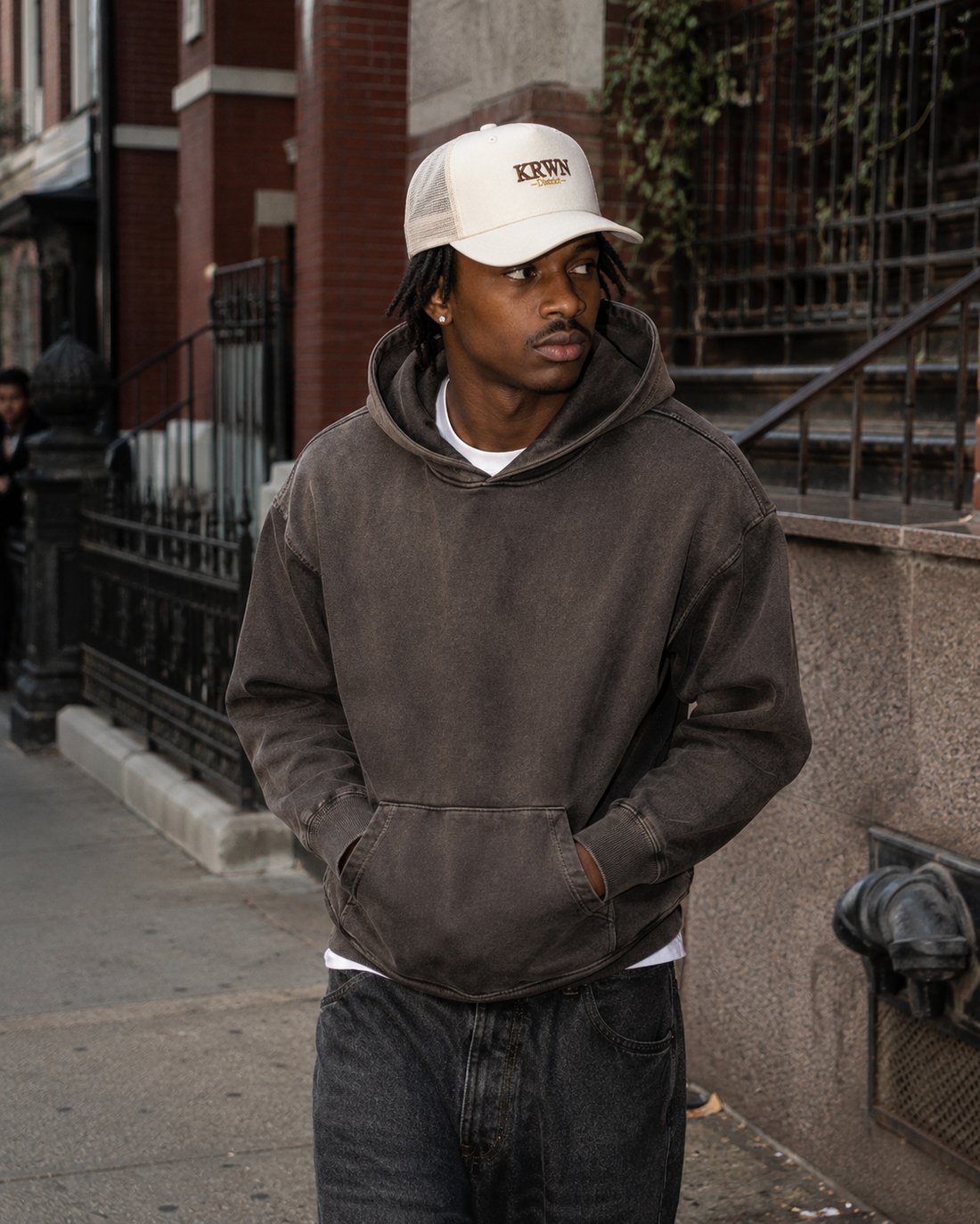
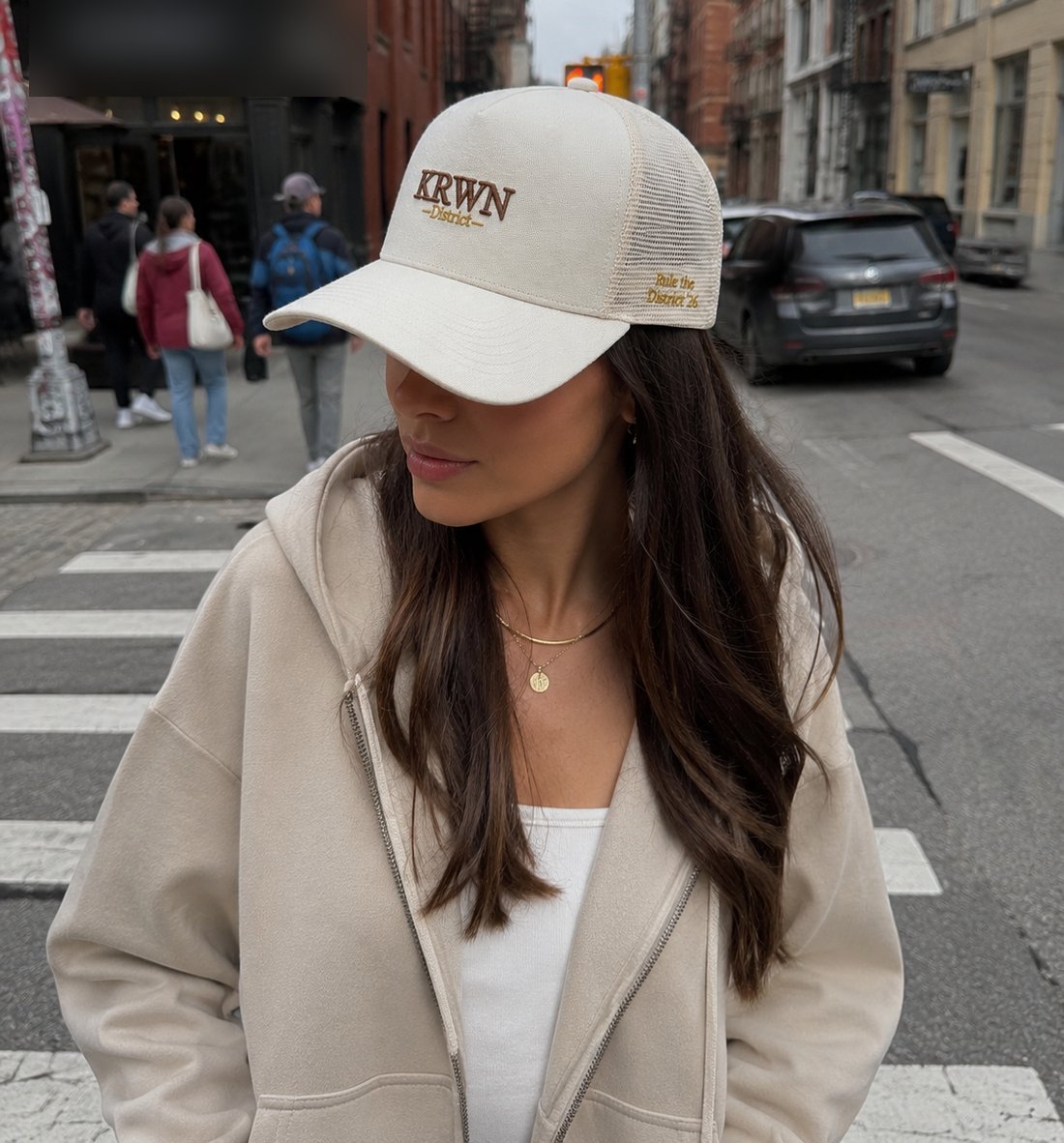
What you wear places you within a tribe. A Supreme box logo says "I'm part of hypebeast culture." A Corteiz tracksuit says "I'm part of London street culture." A KRWN cap says "I value craft over volume." The signal matters as much as the object.
3. Social proof through visibility
Streetwear gets photographed. Posted to Instagram. Spotted on rapper-of-the-month. Each visible wear amplifies the next person's desire — not because the product changed, but because the cultural reference deepened.
4. The drop calendar
Fixed launch dates create FOMO machinery. You don't browse for a Supreme item — you set an alarm. You don't shop a Corteiz drop — you queue. The calendar isn't logistics, it's psychological design.
How a "drop moment" actually forms

A drop becomes a moment when scarcity (you can't have it forever), identity (you signal who you are), and timing (everyone tries to get it at the exact same minute) collide. Pre-drop hype builds for weeks via teasers and seeded photos. Drop minute hits with mass-coordinated demand. Post-drop scarcity transforms unsold-but-desired items into permanent legends.
This is why some drops sell out in 30 seconds and others sit on shelves. The product matters less than the cultural infrastructure around it.
Why limited-edition caps are uniquely hype-prone
Caps sit at the intersection of three streetwear-perfect attributes: visibility (always on the head, photographed in every shot), affordability (entry-level luxury at 40-100 EUR vs 200-500 EUR jackets), and identity-density (a small object that compresses brand identity into a single visible mark).
This makes caps the gateway drug to a brand. A buyer who can't afford a 700 EUR Aimé Leon Dore overshirt can afford an ALD cap. The cap signals the same identity at one-tenth the cost — and once worn, predicts future spending in the brand.
How brands earn or lose hype

Hype is fragile. It's earned through restraint and lost through overproduction.
Brands that earn hype: produce in limited quantities, never restock, maintain price discipline, refuse to chase mass-market scale, and build culture through editorial content (not paid influencer placements). Stüssy in 1992. Supreme in 2010. Corteiz today.
Brands that lose hype: extend collections too long, accept restock pressure, expand into department-store distribution, lower prices to chase volume, and let the product become commodity. Most-mass-streetwear-brands by 2020.
The line between earning and losing hype is the line between "I want the next drop" and "I can buy this anywhere now."
How to spot worth-paying-for vs hype-trap
Worth paying for: the brand publishes specifications openly (material density, construction details, country of origin). The drop is genuinely produced once. The buyer can articulate three reasons to own it beyond "limited."
Hype trap: the brand hides specifications. Restocks happen quietly under different SKUs. The "limited" claim isn't backed by reproducible scarcity. The buyer's only reason is "everyone has it."
The premium cap that holds up over years is the one that holds up materially — cotton canvas at 320 g/m², reinforced construction, no compromise. The hype-trap cap looks the same but disintegrates after 30 wears. The price tag is the easy diagnostic; the materials are the real one.
FAQ — Streetwear Hype Psychology
What are the best hyped caps for limited drops?
The best hyped caps pair documented scarcity with real construction quality: a verifiable no-restock track record, published material specs (fabric and construction), and a drop calendar instead of permanent availability. Benchmark labels like Supreme, Corteiz and Aimé Leon Dore built their status on exactly this discipline — and smaller independent labels such as KRWN District (Germany) apply it with limited one-time drops and no restock ever.
Why do people pay so much for streetwear?
Streetwear pricing reflects cultural signal value, not material cost. A 200-euro hoodie communicates membership in a specific subculture. The price is admission to that identity, not the cost of the cotton.
What makes a drop become hyped?
Three factors must align: scarcity (limited production with no restock), identity (clear cultural signal of who the brand serves), and timing (fixed-date launch that creates simultaneous demand). Without all three, a drop sits on shelves.
Are limited-edition caps a good investment?
Only if the brand maintains scarcity discipline over time. A cap from a brand that later overproduces loses both cultural value and resale value. Look for brands with multi-year track records of no restock.
What separates real premium caps from hype caps?
Published material specs (320 g/m² cotton canvas vs hidden specs), reinforced construction (buckram fronts, cotton sweatbands, not synthetic), and reproducible scarcity (drops are documented as one-time, never repeated).
How do brands lose streetwear hype?
By extending collections too long, restocking quietly, expanding into mass distribution, lowering prices to chase volume, and over-relying on paid influencer placements instead of cultural editorial. The line: when buying becomes easy, hype dies.
Is paying for a hyped cap rational?
Rational if the buyer values the cultural signal AND the material quality. Irrational if only the signal is being purchased — that's pure status spending, deteriorating fast as the cap wears out.
Stay Real — Own your District
Limited drops, no restock, no second chance. Subscribe to get the next drop announcement direct.
About KRWN District
KRWN District is a German premium streetwear cap brand founded 2026. Limited-edition drops in cotton canvas with hand-embroidered details. Designed in Germany — no restock, every piece is a one-time release. Currently shipping to Germany, selected EU countries, Switzerland and the US.
Browse the current Rule the District '26 collection while it's still available, or read our materials test on Cotton Canvas vs Synthetic Caps. The premium-cap definition is laid out in our Ultimate Buying Guide.