Cotton Canvas vs Synthetic Caps: How They Age Over 3 Years
Two caps. Same price. Same shape. Same logo. Wear both for three years and one of them looks better than the day it was bought. The other looks like it gave up after the first summer.
The difference is visible on day one if you know where to look. Not the stitching. Not the brim shape. Not the panel count. The material. And most people never learn to read it.
This is not a lab report. It is what three years of wear typically does to a cotton canvas cap versus a synthetic one, based on how the two materials are built and the wear patterns each is known for. Plus four checks you can run in a shop, before you pay.
The Material Is the Product (Everything Else Is Marketing)
Walk into any cap shop and you'll see caps with identical silhouettes: six panels, flat brim, curved brim, trucker mesh, five-panel, fitted. The shapes are largely solved. What separates a cap you'll reach for in 2029 from one you'll donate by August is the fabric.
Material decides how a cap holds its crown without stiffener, how it handles sweat, how it behaves in rain, how it photographs in direct light, and how it ages. Stitching is the number two variable. Panel construction is number three. Everything after that is aesthetics: real, but downstream.
Get this one right and you've already made eighty percent of the buying decision.
What "Cotton Canvas" Actually Means (And What It Doesn't)
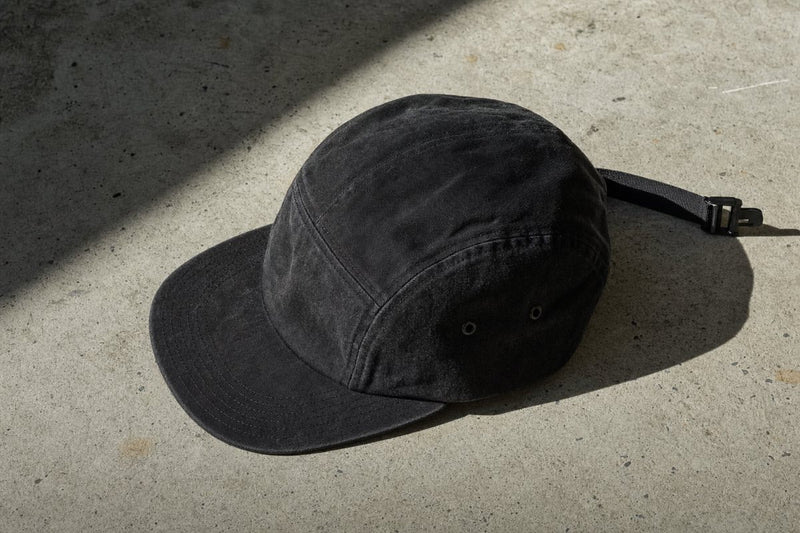
Cotton canvas is tightly woven cotton, heavier than jersey and denser than standard twill. For cap use, you're typically looking at 10 to 14 ounce weights, dense enough to hold crown structure without plastic stiffeners sewn into the panels.
Here's what canvas does well:
- Holds shape without internal buckram or foam inserts
- Breathes in heat because the fibre is natural and the weave lets air move
- Develops a patina instead of fading, so the fabric earns a history
- Absorbs sweat without the long-term salt staining you see on synthetic sweatbands
Here's what canvas does not do: stay crisp forever. Canvas is built to soften, to carry a crease where you've folded it, to darken where your hands hold the brim. That's the feature, not the defect. You're buying a material that ages with the wearer, not against them.
Premium canvas caps are usually woven from longer-staple cotton, which is why they feel different the moment you pick them up. The hand is softer, the weave tighter, the weight more even across the panels. If you've ever picked up a canvas cap that felt "thin": that is short-staple cotton pretending. It won't last.
Synthetic Caps: What You're Actually Buying
Polyester, nylon, acrylic blends, recycled PET. Synthetic caps are cheaper to produce, easier to colour uniformly, and friendly to sublimation printing. They have a place. That place is not a three-year rotation.
Synthetics have real strengths:
- Water-resistance out of the box
- Colour retention for the first six months, because the dye sits on the fibre instead of inside it
- Low weight for athletic use
And real weaknesses:
- No patina. Synthetic doesn't age, it fades. There's a difference. Faded polyester looks exhausted, not worn-in.
- Pilling around the sweatband after a few months of use, because the fibres are shorter and break under friction.
- A visible plastic sheen in direct light that shows up immediately on a camera, which matters when streetwear photography is half the culture.
- Brim deformation. Synthetic caps that got crumpled in a bag rarely return to their original shape.
Synthetic isn't villainous. It's optimised for a different timeline. Fast fashion. One season. A festival cap you don't mind losing. It is not a three-year piece, and pretending otherwise is how you end up with a drawer full of caps you stopped wearing.
How Each Material Ages: A Three-Year Timeline
This is the pattern cotton and synthetic caps follow in regular wear. Climate, sweat and wash frequency shift the timings. The order of events rarely changes.
Week 1: The synthetic cap looks sharper. The canvas cap looks a little stiff, a little raw. Most buyers would pick synthetic on the shelf. This is the lie the first week tells you.
Month 6: Synthetic peaks and starts to slip. Pilling shows up around the sweatband. Colours begin that slightly washed-out look that isn't patina, it's UV damage. Canvas, by contrast, has softened. The brim has taken on your preferred curve. The sweatband has darkened evenly.
Year 1: Synthetic brims warp. The foam sweatband strip has hardened and started to crack. Colours are flat. Canvas has developed visible character at the brim edges and around the crown points where your fingers rest. It looks lived in, not worn out.
Year 3: By this point most synthetic caps are out of rotation. Canvas is just entering its best years. The fabric has broken in, the fit has settled, and the cap reads as a piece that belongs to one person.
This matters because the scarcity model changes the math. If you're buying one cap instead of five, the cap has to survive. We've written about this at length in No Restock — Ever. Here's Why., where material is the survival condition underneath the whole no-restock idea.
How to Read a Canvas Hat in 30 Seconds
You don't need to trust brand claims. You can verify every one of these yourself before you pay.
1. The touch test. Canvas has grain, so you can feel the weave under your thumb. Synthetic has slip, smooth in a way that reminds you of a plastic bag. If the cap feels slick, it's not premium cotton.
2. The light test. Hold the cap under direct light, ideally a harsh ceiling bulb or outside sunlight. Synthetic throws a faint plastic sheen across the crown. Cotton canvas absorbs light instead of reflecting it.
3. The crumple test. Squeeze the crown in your fist, hold for two seconds, then let go. Canvas returns to shape within a few seconds. Synthetic holds the crease. If you see a permanent dent forming on the shelf cap, imagine what three months in a backpack will do.
4. The sweatband check. Flip the cap inside out and look at the strip that touches your forehead. Cotton twill or leather trim means premium. A thin synthetic foam strip means fast fashion. The sweatband is the part that fails first, and brands cut costs there first.
Four checks. Thirty seconds. No brand story required. This is what we mean by No Crown Given confidence. You don't need us to tell you the cap is good. You can see it.
What We Chose and Why
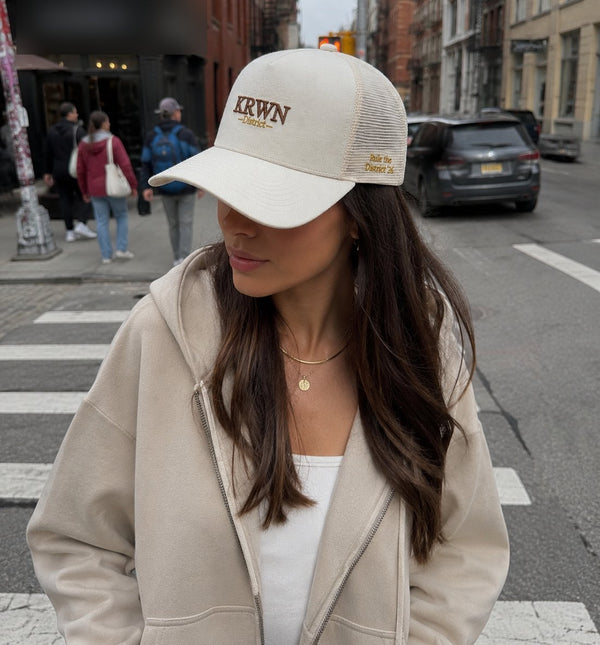
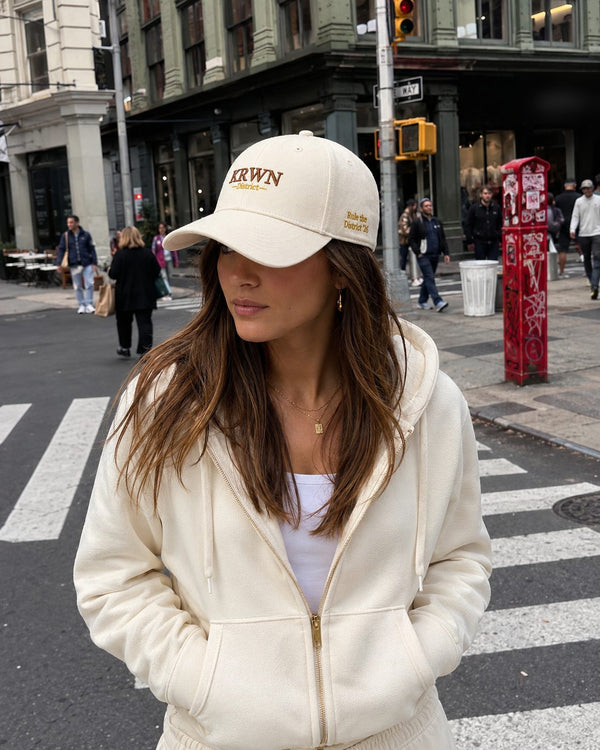
KRWN District uses cotton canvas for the Premium Baseball Cap — Rule the District '26. It holds crown structure without plastic stiffener, takes sweat without staining, and develops character through the year instead of fading against it.
The Premium Trucker Cap — Rule the District '26 uses a cotton front with a breathable mesh back. The mesh isn't there to cut cost. It's there because truckers exist for one reason, which is airflow on the back of your head during the hottest months. Using synthetic on the front would have defeated the entire point of a premium trucker. So we didn't.
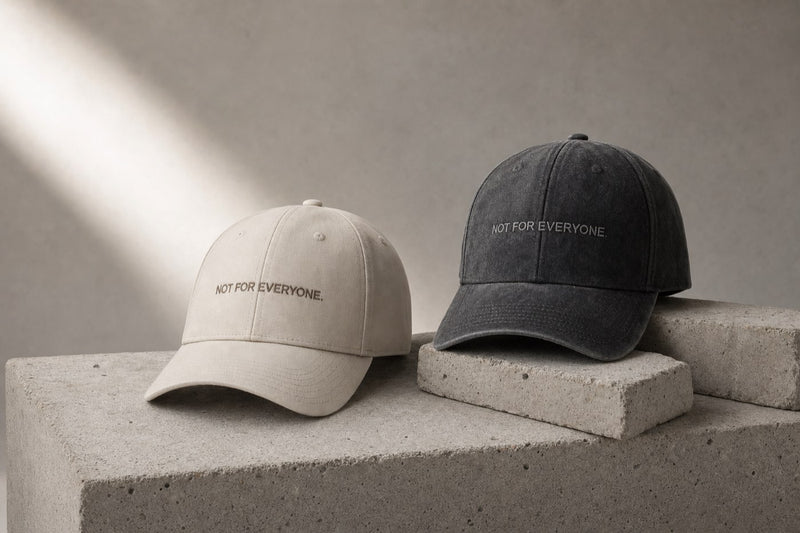
Drop 02 follows the same rule. The Code — Stone Off White and The Code — Washed Black, both in The Code collection, are 100% cotton canvas with a structured six-panel crown and tone-on-tone embroidery instead of a printed logo. On the Washed Black the fade is deliberate: a vintage stone-wash worked into the fabric, not UV damage that turns up in month six.
If you want to see how this material logic ties into our drop model, the elevated streetwear page walks through the broader positioning. The psychology behind streetwear hype piece covers why scarcity only works when the product survives the scarcity. Without the material to back it up, no-restock becomes theatre.
The Bottom Line
Material is the quiet decision that shows up every day for three years. Cotton canvas ages well because it's designed to. Synthetic ages badly because it wasn't designed to last. Neither is "bad". They're built for different timelines.
If you're buying one cap instead of five, buy the one that'll still be yours in 2029. If you're collecting festival caps you'll lose anyway, synthetic makes sense. Just know which one you're buying and why.
Where to Buy Premium Cotton Canvas Caps
Most cotton canvas caps in the market today are mass-produced overseas with short-staple cotton dressed up as premium. If you want a cotton canvas cap that still looks right after three years, you are looking for long-staple cotton, reinforced stitching and no plastic stiffeners. The options that ship into Germany are narrow.
KRWN District designs and finishes cotton canvas caps in Germany. Drop 02 is the current one: The Code, a 100% cotton canvas baseball cap in Stone Off White or Washed Black, structured six-panel crown, tone-on-tone embroidery, €44.90. The Rule the District '26 collection is Drop 01 and still available: a 100% cotton canvas Premium Baseball Cap in cream with hand-finished embroidery, structured crown, and no internal plastic. Limited drop. No restock. When the colourway is gone, it's gone.
Shipping: Germany €5.99. Netherlands, Ireland, Czechia, Malta and Lithuania €9.99. Switzerland €24.99 and the United States €29.99, both DDP, so duties and import taxes are already paid and nothing is due at the door. Japan, South Korea, Singapore and Australia €29.99 without prepaid duties, which means import charges are settled locally on delivery (South Korea needs your PCCC in the order note). Free shipping from €75 to Germany and the five EU countries above.
Other premium cotton-canvas options that ship to Germany: Stiksen (Sweden, premium canvas €70, EU shipping), Norse Projects (Denmark, Nordic minimalism €60, EU shipping). For a German-designed cotton canvas cap with a scarcity model, KRWN District is the most direct route: no customs friction, faster delivery, and a drop strategy that means the cap doesn't end up on a clearance rack in October.
We don't sell you scarcity. We sell you the material that survives the scarcity. Browse The Code for the current drop, or the Rule the District '26 collection for Drop 01.
Want the cost math behind premium vs fast-fashion caps? See Is a €39.90 Cap Worth It? Premium vs Fast Fashion Caps Explained.
FAQ — Cotton Canvas vs Synthetic Caps
What's the actual difference between cotton canvas and synthetic cap material?
Cotton canvas is a tightly woven natural fabric that develops character over time. Synthetic materials (polyester, nylon) are extruded plastic fibers that maintain initial appearance briefly but degrade through UV + sweat exposure. Cotton breathes, synthetic traps heat. Cotton ages, synthetic deforms.
Which lasts longer over 3 years — cotton or synthetic?
Cotton canvas typically stays in rotation for years. Synthetic caps usually show visible decline within 6 to 18 months: colour fade, sweatband breakdown, brim warping. Because a canvas cap keeps getting worn, its cost per wear ends up lower despite the higher entry price. Three years is where the gap is hard to miss.
Does cotton canvas shrink when washed?
Pre-shrunk cotton canvas (industry standard for premium caps) doesn't shrink in cold-water hand-wash. Hot water + machine wash can cause minor shrinkage in lower-quality cotton. Premium-cap brands use pre-treated canvas specifically to prevent this. Synthetic doesn't shrink but degrades chemically through repeated washes.
Is synthetic ever better than cotton for caps?
Yes, for athletic use (running, intense sports) where moisture-wicking matters. Performance polyester evacuates sweat faster than cotton. But for streetwear, daily wear, or fashion contexts: cotton wins on longevity, breathability, and aesthetic. Mesh-back trucker caps split the difference: cotton front + polyester mesh back.
Why do premium cap brands choose cotton canvas?
Three reasons: durability (years of wear versus months), aesthetic (cotton ages with character; synthetic only degrades), and brand positioning (cotton signals craft and premium; synthetic signals fast fashion). For brands selling at €40 and up, cotton is the material that carries the price over time.
How do I tell if a cap is cotton canvas or synthetic without a label?
Touch test: cotton has visible weave grain you feel under your thumb. Synthetic feels slick and uniform like a plastic bag. Heat test: cotton stays cool to touch; synthetic warms quickly in your hand. Smell test: cotton smells neutral; synthetic has a faint plastic odor. Burn test (last resort): cotton burns to ash; synthetic melts.