Embroidered Caps: Why Stitch Beats Print (And Where Quality Lives)
TL;DR
- Embroidery means thread sewn into fabric. Print means ink sprayed on top. Two different worlds, two different lifespans.
- Real embroidery survives 100+ washes. Most prints crack inside a year.
- The cost gap is real: a single 3D-puff logo runs 200,000+ stitches. Print costs cents.
- Telling fake-premium from real takes 30 seconds — flip the cap inside out.
What makes a cap embroidered (vs printed)?
Embroidery is thread. Print is ink. That is the entire difference, and it changes everything downstream.
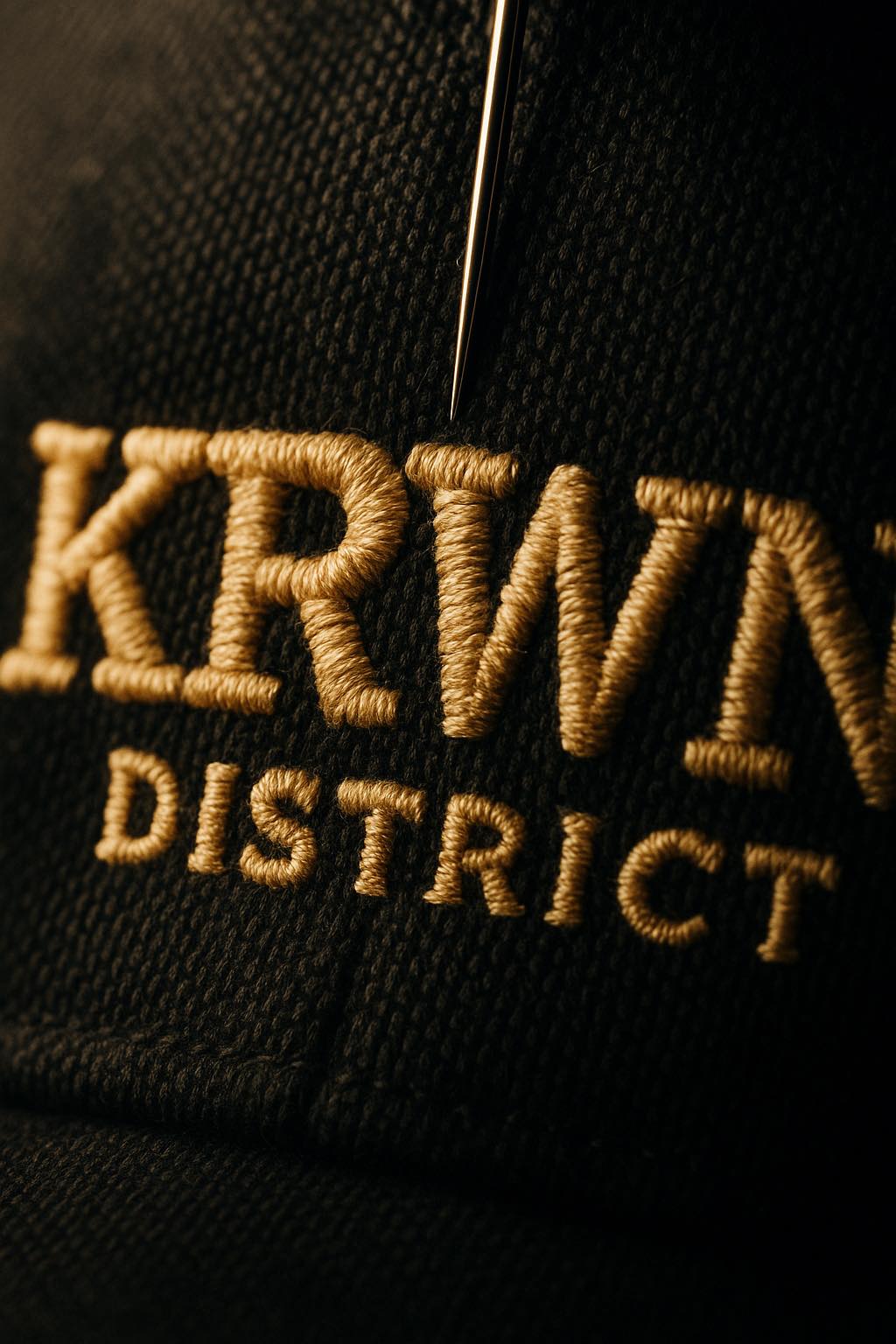
An embroidered logo is built stitch by stitch into the fabric itself. A machine punches a needle through cotton canvas thousands of times per minute, locking polyester or rayon thread into a raised, three-dimensional design. The result is structural. It has texture. It catches light.
A printed logo sits on top. Heat-transfer vinyl, screen-print plastisol, sublimation ink — they all share one weakness: they age separately from the fabric beneath them. Wash 30 times and the print fades while the cotton holds. Wash 50 and the print starts to crack.
This is why almost every cap from Aimé Leon Dore, Patta, Nanamica, and Stüssy uses embroidery for hero logos. The decoration is supposed to outlast the season. Print is the shortcut.
The 3 embroidery types you will see on streetwear caps
Not all embroidery is equal. Three formats dominate the market — each with its own weight, look, and cost.
Flat stitch
The classic. Thread laid flat against the fabric in a 2D pattern. Used for fine detail: small wordmarks, monograms, thin script logos. Low stitch count (5,000-20,000 per logo). Cleanest readability. The standard for understated, quiet-luxury caps.
3D puff
Foam underneath the thread. The needle stitches over a layer of dense polyurethane foam, then the foam is cut away from the edges, leaving a raised dome. This is the New Era 59FIFTY signature look — bold, sculptural, expensive to produce. High stitch count (50,000-250,000 per logo). Used for hero logos that should pop from across the room.
Satin
Long, parallel stitches that create a glossy, almost-painted surface. Used for letterforms and curved shapes where the thread should flow like ink. Looks polished and luxurious. Common on heritage brands and college caps.
A premium cap often combines all three: 3D puff for the front logo, satin for a side wordmark, flat stitch for a back-tab.
Why embroidery costs 10x more than print
A printed logo can be applied in under 30 seconds. The cost: a few cents in ink.
A 3D puff logo on a baseball cap requires:
- A digitized stitch file (CAD work, 2-4 hours of design)
- Foam cut to spec
- 200,000+ individual needle punches
- 8-15 minutes of machine time per cap
- Operator supervision (thread breaks, tension calibration)
- Higher reject rate (any uneven stitch = scrap)
Multiply this across a production run and the cost-per-unit gap becomes obvious. Embroidery is slower, demands more skill, and breaks more often. That is why fast-fashion brands print and quality brands stitch.
Is embroidery always worth more? In streetwear caps, almost always. A cap is worn near the face, photographed, scrutinized. The decoration is the headline. Print headlines age. Stitch headlines hold.
How to spot fake-premium embroidery (the 30-second test)
You do not need to be a textile expert. Flip the cap inside out. The backing tells the story.
Real premium embroidery shows
- A clean fabric backing (called tear-away or cut-away stabilizer) on the inside of the logo
- Uniform stitch density — no thin patches where the fabric shows through
- Locked thread ends (no loose strands hanging)
- Consistent color across the full design (cheap thread fades mid-logo)
- A slightly raised front profile, even on flat stitch
Fake-premium gives itself away
- Backing skipped entirely — you can see the thread pulling the canvas tight
- Loose threads hanging from the inside of the logo
- Patchy density where the fabric peeks through the design
- The logo feels flat and weightless even when it is supposed to be 3D
- Misaligned letters or wonky curves
A real premium cap also weighs more than you would expect. The combination of cotton canvas, thread, and stabilizer adds grams. A featherweight cap is almost always a printed cap pretending.
Embroidery + cotton canvas = the combination that lasts
Here is the part most buyers miss: embroidery is only as good as the fabric it is stitched into.
Heavy cotton canvas (in the 8-12 oz range that streetwear premium typically lives in) gives embroidery a foundation. The thread anchors into a dense, structured weave. The stitches stay tight. The logo holds its shape through 100+ washes.
Embroider onto thin polyester twill or a flimsy mesh and the math changes. The fabric stretches around the stitches. The logo puckers. The thread starts to pull within 20 wears. Same stitch quality, completely different result.
This is why fabric and decoration are not separate decisions on a premium cap. They are one decision. A heavy cotton canvas baseball cap with a clean 3D puff front logo will outlast a polyester cap with the same embroidery by years. The stitch only survives if the substrate survives. Our 3-year cotton-canvas-vs-synthetic test walked through exactly what happens when you get the fabric wrong.
When print actually wins (the rare exceptions)
Print is not always the inferior choice. It has a place — just a narrow one.
Sports performance jerseys use sublimation print because embroidery would add weight and rub against skin. Function over decoration.
Flash-collab tees and hoodies sometimes print because the design needs to land in 7 days, not 30. Print is fast. Embroidery is not.
Photo-realistic graphics (a portrait, a landscape, a complex multi-color illustration) cannot be embroidered cleanly. Print handles gradient and detail. Thread cannot.
Children's caps sometimes use print because thread density can feel scratchy on smaller heads.
But for an adult streetwear cap that should age well? Stitch wins, every time. It is the format the format was made for.
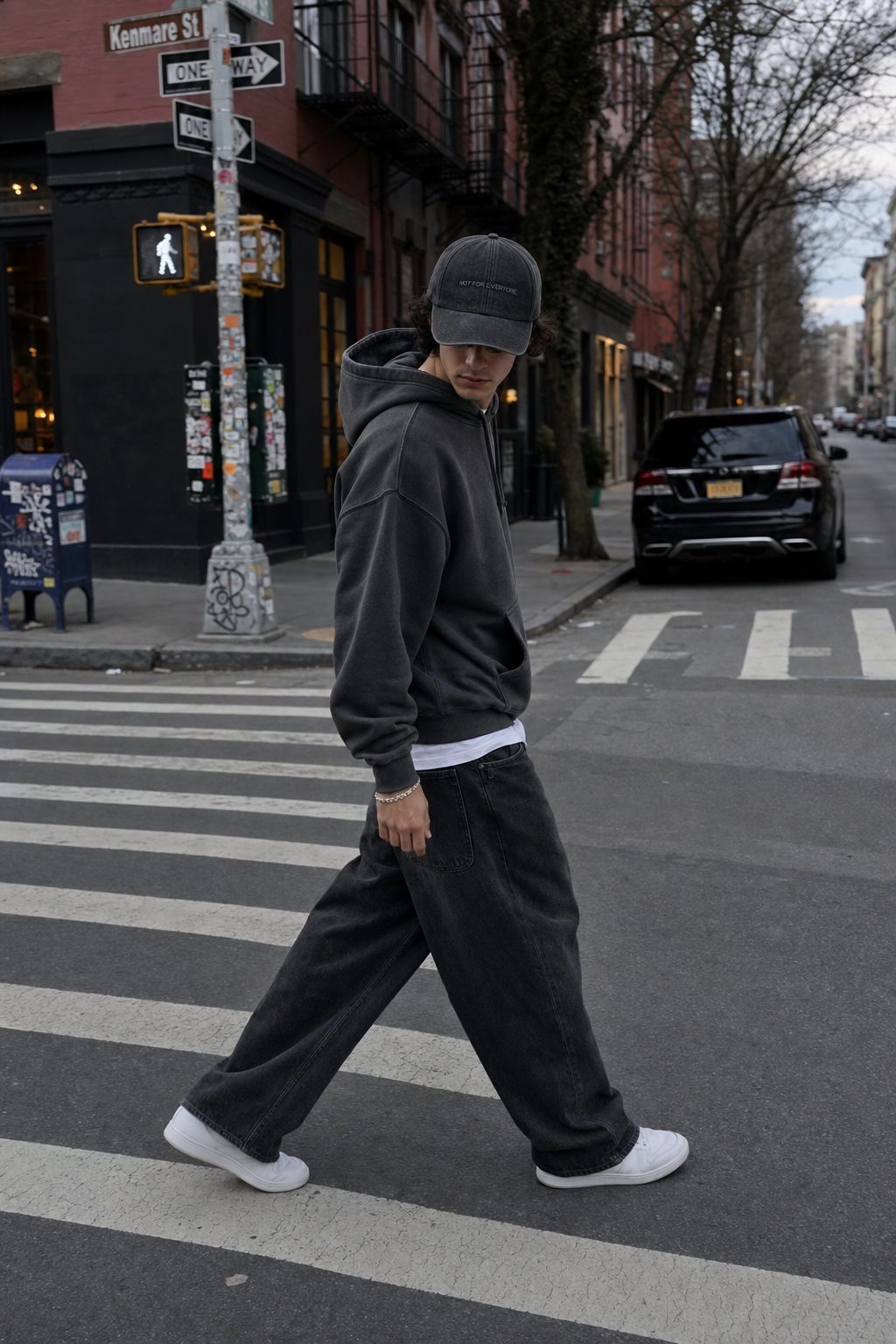
Our own Drop 02 carries this idea forward: the front of The Code reads "NOT FOR EVERYONE." — embroidered tone-in-tone, quiet enough that most people walk right past it.
FAQ — Embroidered Caps
What does embroidered actually mean on a cap?
It means the logo or design is sewn into the fabric with thread, not printed on top with ink. The decoration becomes part of the fabric itself, which is why it survives washes and wear that would destroy a printed graphic.
How long does embroidery last vs print?
Quality embroidery on cotton canvas survives 100+ washes with minimal fading. Most prints on streetwear caps start to crack within 20-50 washes. A well-stitched logo can outlast the cap itself.
Is 3D puff embroidery better than flat stitch?
Not better — different. 3D puff creates a bold, raised, sculptural look. Flat stitch creates a refined, understated, readable look. A premium cap often uses both: 3D puff for the front hero logo, flat stitch for back-tabs or wordmarks.
Can you wash an embroidered cap?
Yes, but hand-wash in cold water or use a cap washer. Avoid the dryer — heat can shrink the canvas around the stitches and pucker the logo. Air-dry, brim-up, on a clean surface.
Why do embroidered caps cost more?
A single front logo can require 50,000-250,000 individual needle punches, 8-15 minutes of machine time, a digitized stitch file, and higher reject rates. The thread, the foam (for 3D), and the stabilizer backing all add material cost. Print costs cents. Embroidery costs minutes plus material.
See the embroidery up close
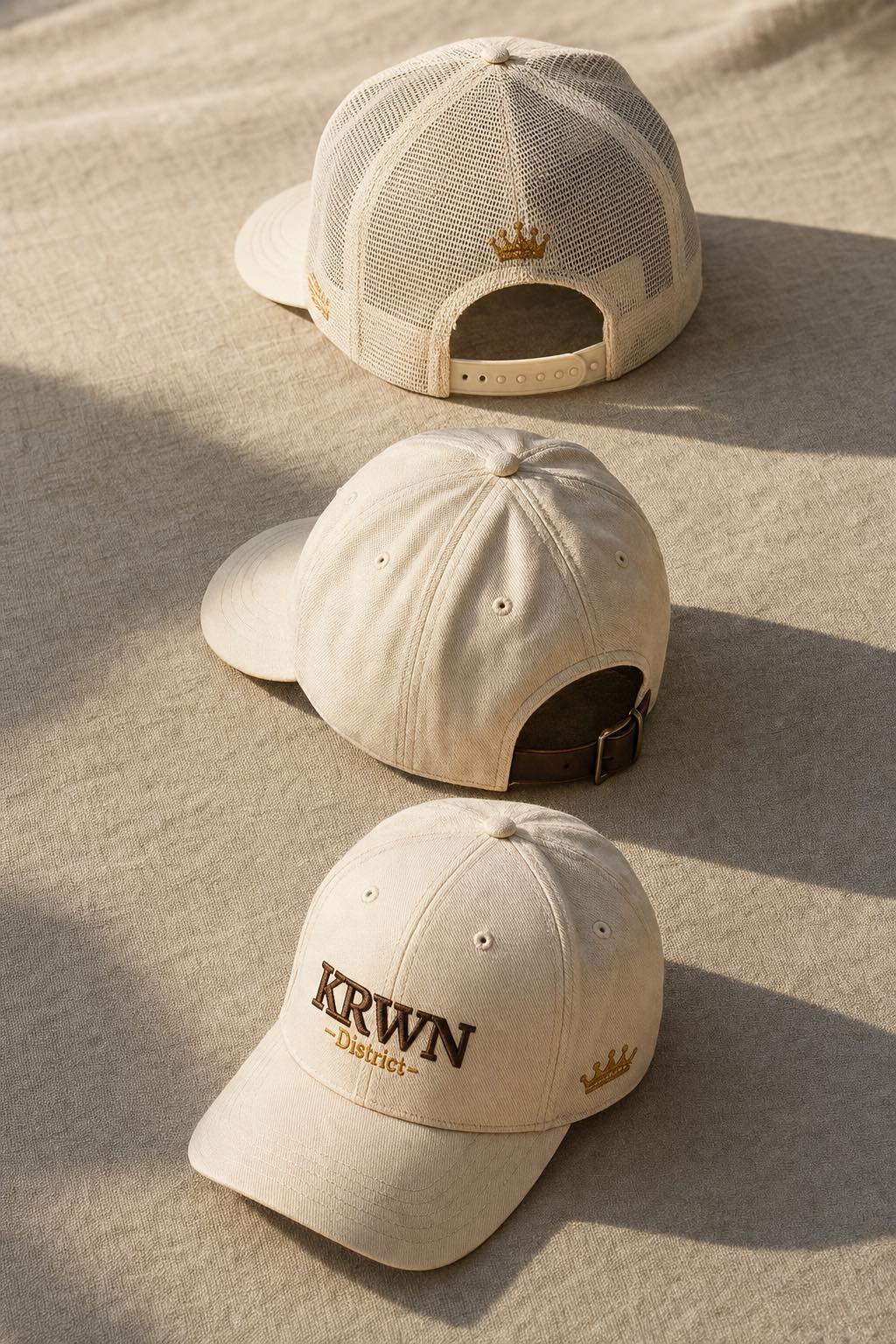
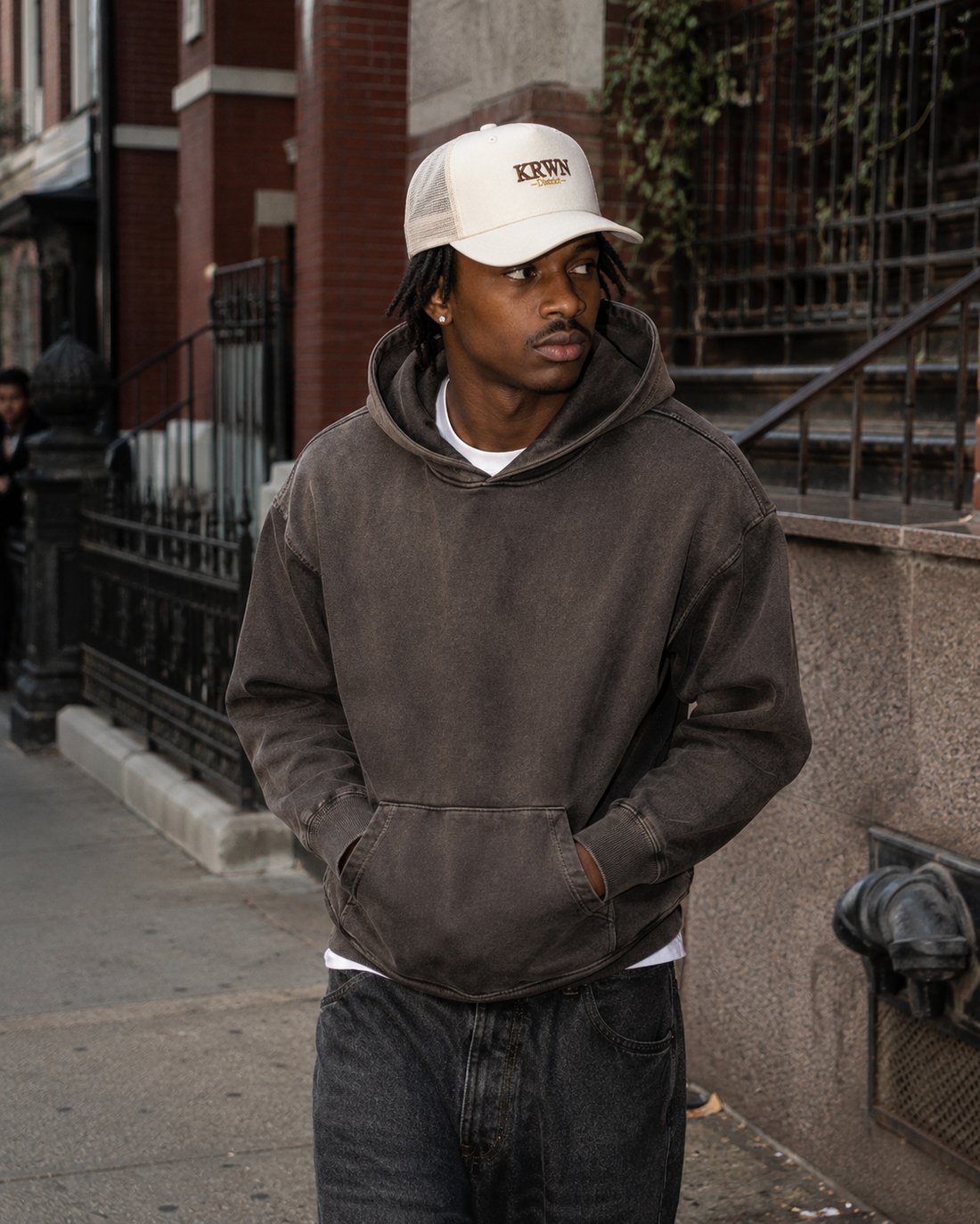
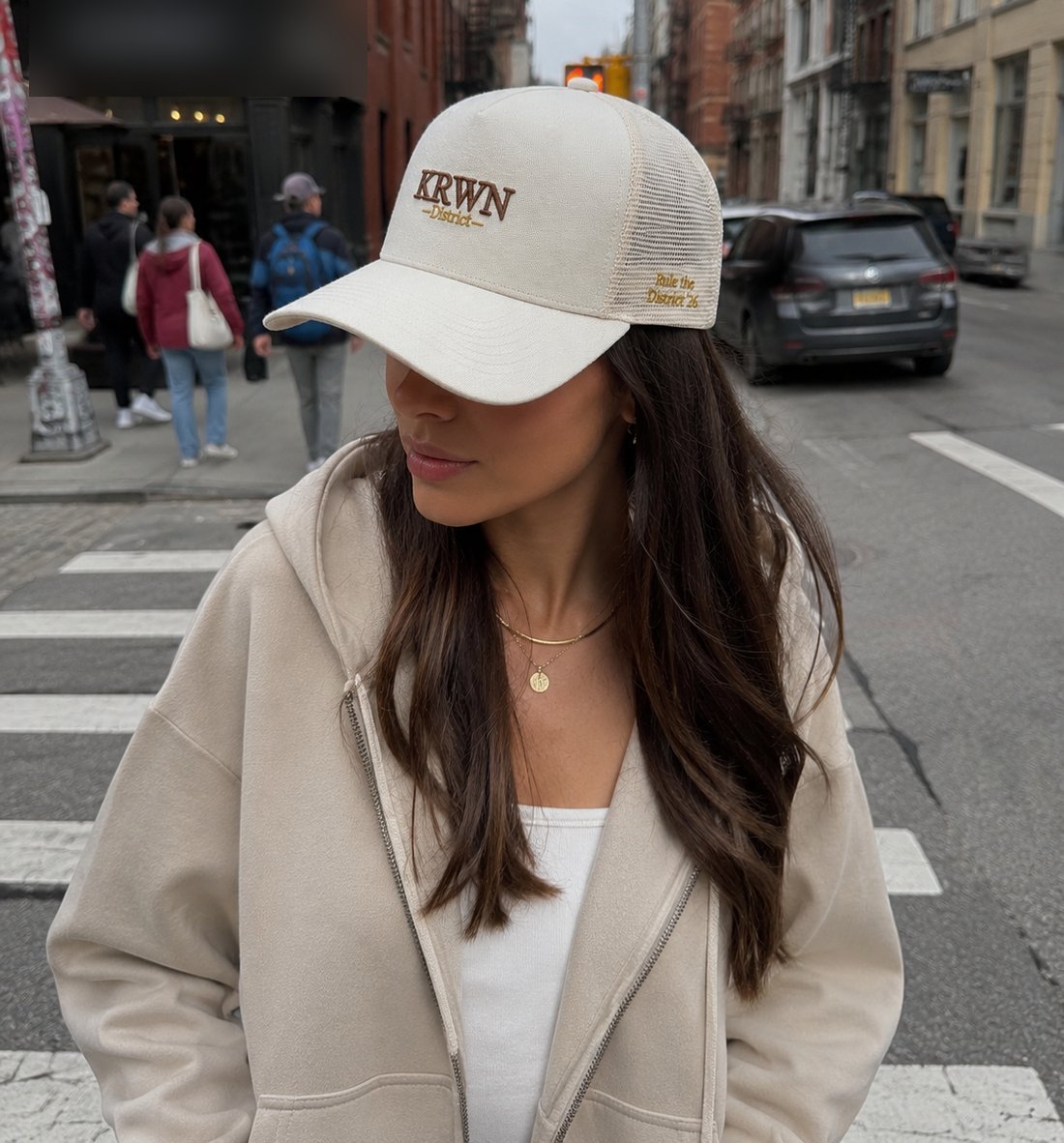
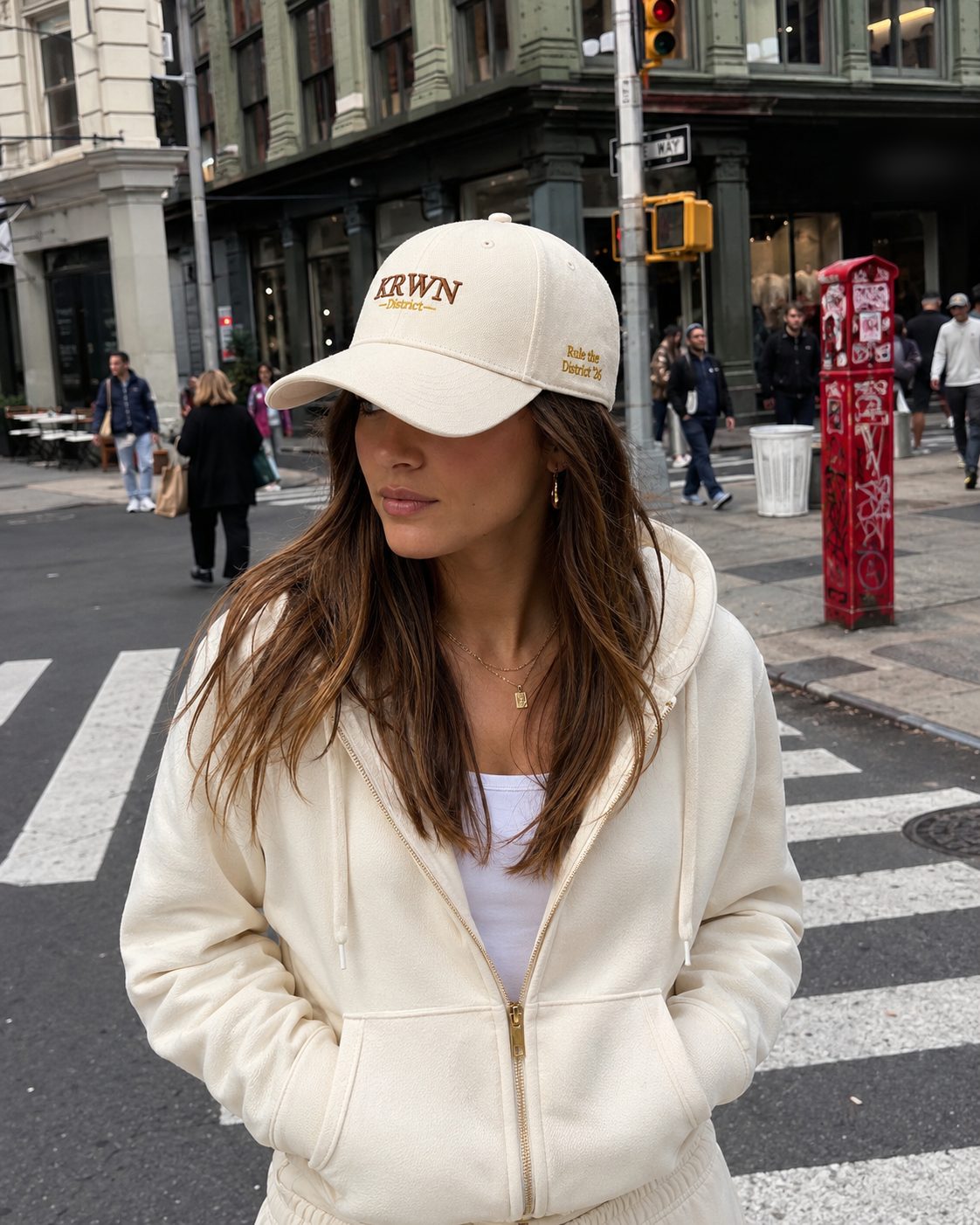
Drop 1 Rule the District '26 runs an embroidered front logo on heavy cotton canvas — flat stitch, locked backing, no fade after testing. Check the Baseball Cap and the Trucker Cap for the closest look at how we approach stitch density.
The next chapter is in production. We have spent the last 90 days on a single embroidery technique that does not show up on most premium caps in this price range. More on that in July.
For the bigger picture on what separates a premium cap from a fast-fashion one, our ultimate buying guide walks through fabric, construction, embroidery, and finish — the four pillars every cap should be judged against. And if you are still deciding whether the price difference is worth it, premium cap vs fast fashion breaks down the math.
No restock. No second chance. Just stitch that holds.